Tell me the old, old story: the working class and schools

With the publication later today of the Star Academy Trust commissioned report into outcomes for ‘white working-class boys’, I thought I would look at what I posted when the inquiry was announced last year. Class matters more than ethnicity | John Howson

However, I cannot help thinking that the focus of the inquiry is wrong. All the evidence suggests that of the three factors of race, gender and class, it is the third one that really matters. Yes, they are often inter-related, but looking at socio-economic data, it is often schools in deprived areas, regardless of the ethnicity of their pupils that fare less well in school performance table.”

Way back in 1982, nearly 50 years ago, I used some evidence from a book published in 1926 by Kenneth Lindsay, and entitled ‘Social Progress and Educational Waste’ about the wide variations in the percentages of children obtaining secondary education – not mandatory for all until 19944 – to discuss differences in provision for schooling across England. (Variations in Local Authority Provision of Education Oxford Review of education, Volume 8, Number 2, 1982). Lindsay, in his book, found one school in Lewisham that won as many scholarships to secondary school as the whole inner city area of Bermondsey out together.’ Differences in education by social class were commonplace.

In the 1960s, The Plowden Report into primary education found that ‘the boroughs in which expenditure [on schooling] was generally low were very much the same in 1960-61 as they were in 1950-51.’ Later that decade another report Half our Future looked at the children leaving school at 15. I celebrated its 50th anniversary with this blog post Half Our Future: A tribute | John Howson both Reports revealed the differences in outcomes for different social classes and how those gaps might be reduced.

Finally, in terms of evidence of the different education outcomes for different groups in society, it is worth reading the Oxfordshire County Council report to Education Scrutiny Committee of 16th October 2014 ESC_OCT1614R05 Educational Attainment of White Working Class Boys.pdf

So, don’t expect anything new, today, but I would like this report to be linked to the speech by Andy Burnham, also to be given today that should speak about the importance of ‘place’ and devolution in our society.  

Both Lindsay and Plowden wrote when schooling was a devolved activity, sometime described, at the time, as ‘a local service nationally administered’. Since then, the administration of schooling has become more site -based with schools operating their own budgets, but more nationally controlled from Westminster. This shift in ‘place’ doesn’t seem to have done much for the educational achievements of white working-class boys.

So, will a shift back to more local or regional decision-making move on the dial for outcomes? Much, I think depends on the interplay of the 4 ‘P’s of Education power

Parents

Premises

People

Purpose

And how they operate together.

The Conservatives, after the 2010 general election had ideas, but they didn’t work for those not wanting to go on to high education. Interestingly, although academies were free from following the National Curriculum, few looked at whether it was appropriate as a curriculum for their communities.

However, what is common to all places is the vital need to engage with effective early learning. If all young people achieve successful early in life, then, with the building blocks firmly in place, more can be achieved later. Fail early, fail often in schooling, and with failure comes disillusion and a lack of engagement.  

So, let’s continue the battle to achieve success in education for all, but it won’t be easy, and will need a view of ‘place’ that incorporates local, regional and national policy-making that supports communities and their schools.

So where does parental choice fit into this model of support? More importantly, where does a selective secondary school system fit into the thinking about the issued raised in today’s report?

Three cheers for books

Book fairs are fun. Today, was the Wolvercote Book Fair in north Oxford. A small local event, but I sold enough of my book to cover costs and have some enjoyable chats with other publishers, authors and booksellers. See does your library | Search Results | John Howson for details of my book of posts from this bog, available either from Amazon or direct from me by ordering through the comments section.

What struck me today, for the first time, while talking to authors, is that the current drop in the birth rate is going to make life harder for the book trade, and especially those selling into the markets for pre-readers and early readers. I guess that the big publishers will manage, but smaller publishers, and the growing market of self-publishers might notice fewer customers for their writing. However, I suspect that many authors in this market aren’t publishing to earn a living, but either as a side line or even, just because one can these days.

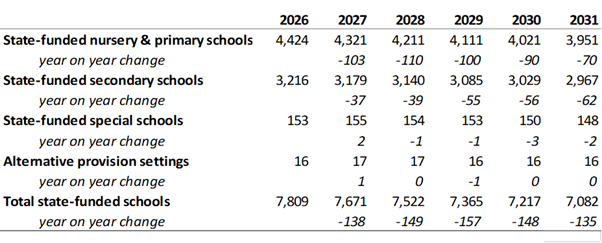
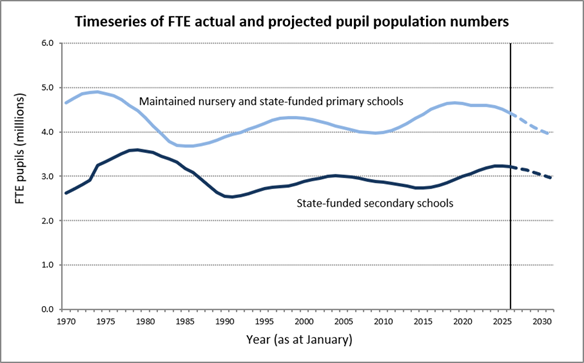
Between 2025 and 2030, the nursery and primary school population in England is expected to shrink by around 300,000, from 4.5 million to 4.3 million. When the latest estimates appear next month, this number may have grown even larger. Release home – National pupil projections – Explore education statistics – GOV.UK

Eventually, this downturn in pupil numbers will affect textbook sales and purchases by secondary school libraries, as the secondary school sector is also affected by falling student numbers. If, at the same time, school budgets come under pressure, and in order to support staffing costs, then anything related to pupil numbers, such as books and other resources, may well be high on the agenda for cuts in spending.

I wonder whether there is now a space for competition to Amazon as a publisher for the self-publishing market that is both easy to use and cost effective. Any scheme would need to cover both ebooks and physical books, and to allow for the downloading a copy at home by purchasers. This latter opportunity offsetting the postage and packing costs of a physical copy of a book with the cost of the paper and ink. Would it work, even if it is on paper and doesn’t look like a traditional book. Afterall, articles have been available on-line for years.

I have often wondered why schools, and especially MATs and local authorities, don’t do more to sell resources to each other. I know that some schools and colleges do so, but I wonder whether there is scope for more initiatives of this kind now that publishing is so easy. How about a publisher in residence, to sit alongside the artist and musicians in residence to encourage teachers and pupils to generate material for publication and use by others.

Finally, I was asked if I would produce a 100 best posts from the 13 years of the blog. Now there’s a though. No 1 most read post is the one about how much holiday do teachers really have? This was first published on May 30th 2002, and is still available to read.

DfE Vacancy website: two irritations

For years one of the features of the DfE’s vacancy website that has irritated me is the seemingly random repeating of vacancies. The example below, seen this morning, is an extreme example of this tendency, with the two adverts for the same vacancy appearing next to each other on the same page. I never know whether this is either a coding glitch that has existed since the site became active or a deliberate attempt to ensure some vacancies are repeated in case viewers missed them on their first appearance in the listing or search. Either way, putting the two versions next to each other doesn’t seem to me to be sensible.

Headteacher

Bordesley Green Girls’ School & Sixth Form, Birmingham, B9 4TR

Full-time equivalent salary

L33 to L39

School type

Local authority maintained school, ages 11 to 18

Working pattern

Full time

Closing date

30 June 2026 at 9am

Visa sponsorship

Visas cannot be sponsored

Headteacher

Bordesley Green Girls’ School & Sixth Form, Birmingham, B9 4TR

Pay scale

L33 to L39

School type

Local authority maintained school, ages 11 to 18

Working pattern

Full time

Closing date

30 June 2026 at 9am

Visa sponsorship

Visas cannot be sponsored

Another irritation of the DfE vacancy site, as far as I am concerned, is that a search on the term ‘headteacher’ can result in random vacancies for other posts appearing in the search, such as this on today for an ‘assistant principal’. This is not an issue at this time of year when there are few vacancies on the site, but is more of an issue when there are a couple of hundred vacancies to consider.

Assistant Principal – Behaviour and Alternative Provision

More than one location, Archway Learning Trust

Full-time equivalent salary

From £67,898 to £75,049 per annum

School type

1 academy, None, ages 11 to 19

Working pattern

Full time

Closing date

6 July 2026 at 9am

Visa sponsorship

Visas cannot be sponsored

Both the issues mentioned here may cause problems for AI generated searches aimed at counting the number of vacancies for particular post.  The search mechanism would need to be very sophisticated to cope with such anomalies.

This is the reason why, at present, I still spend a couple of hours a week studying the list of vacancies. I would be delighted if anyone would provide me with a foolproof automated regime to collect vacancies, because forty years of collecting headteacher vacancies has taught me that it is not a straightforward exercise.

Later next month, when I come to write my annual report of the 2025/26 school-year and headteacher vacancies, I will discuss some of those issues in more detail, including ‘what is an Executive headteacher’ and do we need a definition?

Meanwhile, I have collected data on just under 1,400 nursery, primary, secondary and special schools that are state-funded and located in England and have advertised for a head teacher since 1st August 2025.

Since January, I have also been collecting data about vacancies for teachers of music in state-funded secondary schools. Next year, I might expand that to include private schools so that I can understand the completion for teachers across both sectors.

Watch our for the report that will be published either in Late July or August this year.

Music ITT: has the government made a mistake?

New entrants to postgraduate teacher preparation courses in music in 2026 will not receive a bursary. Instead, they will be need to rely upon either student loans or other funding. How has this change affected applications to train as a music teacher?

The news is not good. The June data for applications is the second worst number since the 2013/14 round more than a decade ago. Only the 2023/23 round post covid that was a terrible round across all subjects, has recorded a lower figure for applications than June 2025. In context, the June number of offers, a better measure than applications, is not far short of half the level seen in the covid year of 202/2, and around 25% below what might be expected in a usual round.

Worry, not because the government has decided that falling rolls over the next few years will mean fewer teachers of music need to be trained. Reducing the target from a requirement of 565 teachers of music in 2024/25 to just a requirement of 260 new trainees in 2025/26 suggests either the previous targets were way out of line or a need to justify the removal of the bursary by setting a target that can be met. After all, it would be unfortunate to remove the bursary as unnecessary, but still miss the target.

So, what of demand from state schools for music? Since January, and the start of the recruitment round for September 2026, I have recorded some 530 schools advertising for a teacher or music. Allowing for the fact that perhaps 100 had a TLR attached, so were not ideal for newly qualified teachers, this suggests 400 posts for newly qualified teachers so far. Add in perhaps another 100 autumn term vacancies and overall demand might be in the range of 400-500 posts or 500-600 posts overall.

The DfE expects about half of vacancies to be taken by existing teachers or returners each year. The exact number depends upon where the demand is and how it relates to supply. But, sticking with the 50% figure means a demand for around 250 to 300 new entrants each year.

Now, with falling rolls be might reduce that number by 10% to 225 to 270 as a requirement. On the face of it, the new target of 260 look risky but manageable. However, it must include two assumptions: all those that are offered eventually complete their courses and of ‘completers’, all join the state secondary school sector.

Both, based upon past trends are unrealistic assumptions. Being generous, 90% of those offered places complete the course. This suggests an output of 236 against a target of 260. Rounding up to 240 new entrants, this mean the new target is still not way of demand.

However, not all ‘completer’s join state schools. Some don’t enter teaching at all; some join Sixth Form Colleges or primary schools; some join the independent sector and some may decide to work overseas in the growing international school market. The 2025 data Less than 400 teachers of physics entered service in 2023/24 | John Howson based upon 2023/24 entry patterns showed that 80% of those gaining a QTS on a music ITT course entered teaching in a state-funded school. This includes both primary, secondary and special schools.

Assuming the 80% as a baseline – the next set of data should be out next month – our total of 240 reduced to less than 200. That number is starting to look as if the cut to music ITT places has been too savage.

A cynic might suggest, but I never could, the target was reduced to ensure it would be met and to save face over the removal of the bursary.

Whatever the reason, the DfE has now risked demand continuing to outstrip supply and this to affect the teaching of music in the nation’s secondary schools. With the recent announcement of the programme to ensureEvery child to get access to enriching activities to build skills and confidence for life’, the new target looks even less sensible  Every child to get access to enriching activities to build skills and confidence for life – GOV.UK.

I haven’t seen any campaign from the sector asking the government to revisit the target, but perhaps there should be in light of these numbers unless falling rolls are going to affect the demand for teachers of music more than I have calculated.

I would welcome any comments on the data.

No, No, No, please do not impose a GCSE test on university applicants

There was a discussion this morning on the BBC radio Today programme about a suggestion from Whitehall that everyone claiming a student loan should have a pass in English at GCSE. By English, I assume they mean English Language. I am vehemently opposed to such an idea. Let me explain why.

In the 1960s, when I was in the third year of my sixth form career, with ‘A’ Level grades of BBC in History, Geography and Economics, and a merit in what was then the special Paper, I still didn’t have a pass in English. (After six attempts, I finally succeeded in the following January examination).

Looking to universities where I could apply to study, some of whom had only recently dropped Latin as a compulsory requirement for many subjects, I struggled to find six courses that I could apply for without a pass in English Language.

In the end, LSE, a university with large number of mature students with non-standard entry requirements, Leicester, and a couple of then new universities were my only options. Eventually, I joined my twin brother to study at LSE, following in our father’s footstep, although he studied as a part-time mature student, and I was a full-time day student with both a grant and a scholarship.

So, I oppose any move to ration university places by such an arbitrary measure as a pass in GCSE English, just as I oppose the idea of a sudden death all or nothing Baccalaureate – even the IB, with its many good points.

However, I don’t just rest my opposition on the basis of my personal testimony.  As previous posts on this blog have demonstrated, the education offered to pupils that put their trust in the State to educate them varies significantly from place to place, and over time.

After a period of teacher shortages, lasting more than a decade, the nation may now be moving towards a period when becoming a teacher becomes more difficult and everyone can be taught by teachers qualified in their subject.

But, should those teaching music, art, parts of design, and other subjects be restricted by a requirement to be proficient in English before taking a degree course?

Well, of course, they already are if they want to be a teacher, as ITT has minimum standards. When undergraduate teaching degrees were still commonplace, universities used to set approved tests for those without the paper qualifications in English. I guess such local tests would be a way around any new requirement. However, if the government mandated that access to student loans required either a pass in English or any other such approach, individual institutions might find circumventing the new rule more of a challenge.

The figure of 33,000 students without a pass in English was mentioned in the radio piece. However, we weren’t told what subjects they were studying. There may well be a debate about the numbers going to university, but as a society I would hope that we had moved beyond such an arbitrary rule: then I look at requirements for entry into school sixth forms, and know that today, I would not even have made it to ‘A’ Level, and those grades I acquired, in far too many schools.

We may need more cash for defence, but not at the expense of the education of late developers, those brought up in the wrong geographical area, and those facing the many other barriers already in place for our young people considering higher education and a degree.

MayDay for some ITT subjects: joy for others?

Such are the wonders of modern technology that the DfE is now able to publish the monthly ITT data on a bank holiday. The data for May was generated on the 18th May, so is already a week out of date. However, it is good to see civil servants managing to keep to the regular publication date for these statistics, even though it falls on a bank holiday.

With the downgrading by the DfE in their analysis of the Teacher Supply model outputs of requirements for the number of trainees needed in many subjects, some admissions tutors can look for an easy final three months of the current recruitment round.

For others, the remainder of the time until courses start in September will still be take up with encouraging more people into teaching as a career. Worries about AI and graduate careers have not yet seemed to have driven graduates in many subjects towards teaching as a career in larger numbers than in the past.

However, there is a concern, registered by this blog in previous posts, about the dominance of certain subjects in the monthly ‘offers’ table.

Three subjects, mathematics, physics and computing make up 32% of all the offers in secondary sector subjects on the 18th May. Three other subjects (Classics, Business Studies and ‘other subjects’) have made so few offers that these subjects almost certainly won’t fill all the places available this year, based on the DfE target number for these subjects.

Another three subjects are at risk of not filling places this year unless recruitment improves after graduation in June. (Geography, Music and Religious Education). Although Biology almost certainly will fill the places on offer, I have downgraded it to PROBABLY from YES, as overall science ’offers’ already exceed the target.

The likelihood of those offered places in mathematics, physics and computing actually taking up their places needs to be closely monitored, because of this extreme distortion of the overall data by the number of offers made in these subjects.  

Looking at applications, the growth in applications is mostly from career switchers in the 25 to 49 age groups. The under 25 have only seen an increase of 1,078 in applications, compared with 2,465 for the 25-29 age group. Indeed, the youngest age group of new graduates have seen an increase of only 166 on May last year.

There has been a significant increase in male applicants, up from 14,992 to 20,003, when comparing May 2025 with May 2006. This must be the first time in many years that the increase in applications from men has been greater than the increase in applications from women.

So, where has this growth in male applicants come from? It seems likely that the ‘Rest of the World’ grouping has provided many of these applicants, as applications from the ’Rest of the World’ increased from 7,727 in May 2025 to 12,909 in May 2026. London, where the increase has been from 6,708 to 7,534, is the only other region with a significant increase.

Perhaps, surprisingly, considering the wider job market, applications from candidates in the North East, from Wales and from Northern Ireland are all below their May 2025 levels.

The majority of applicants are for secondary subjects, so much so that there are now more than twice as many applicants for secondary subjects as for the primary sector as a whole. Candidates may be perceiving that falling rolls will make finding a post as a primary school teacher more of a challenge, and avoiding that career option.

Higher Education has been the key beneficiary, if you can use that term, of the increase in applications, up from 26,876 candidates in May 2025 to 33,0325 in May 2026. Post graduate apprenticeships, up from 5,505 to 9,184 was the only other route with a significant increase in candidate numbers. Teacher degree apprenticeships increased from 677 candidate in May 2025 to 1,534 in May 2026, not an overwhelming vote of confidence for this route into the profession.

These monthly numbers are becoming so distorted that at the headline level, used by many, they are possibly now misleading. A review of how the data are presented seems overdue.

Finally, I still think the removal of the bursary from music was a mistake. The following chart, although busy, shows ‘offers’ over the past decade. This year, is towards the bottom of the range.

NEETs, schools and teachers

The DfE has recently published an analysis of the factors contributing to the risk of a young person becoming a NEET (Not in Education, Employment or Training) at certain ages. Risk factors for becoming NEET: a statistical analysis using linked data

The key conclusion was that

At each age group, and when controlling for overlapping risk factors, three factors stand out: persistent absence from school during KS4, having an EHCP, and not attaining 5 good GCSEs including English and maths.” Page 20

Two of these risk factors may have been made worse for some pupils by the fact that for the last decade there has been a shortage of qualified teachers in many subjects. Not all schools have suffered equally from staffing shortages, and within schools, not all pupils may have experienced the same degree of teaching from teachers with less than optimum qualifications and experience in the subjects that they were teaching in the secondary sector.

Might less than excellent teaching be a contributory factor to both absence during KS4, and the failure to attain 5 good GCSEs including English and maths? Perhaps the report would have benefitted from some cases studies linked to schools with high risks factors, but low rates of NEET?

Are there regional differences in the risk factors, perhaps associated with local job markets? Might the consequences of AI on the graduate labour market mean that such a study in a few years’ time might have a different set of risk factors?

Has education policy during the past decade, with an emphasis on the subjects in the English Baccalaureate contributed to some pupils becoming NEETs, perhaps because they found the curriculum, however well taught, not interesting at KS4, even though most will have accepted the need to study English and Mathematics.

In terms of in-school factors, I was surprised not to see anything about valued added from year 7 to 11. Can we trace the likelihood of becoming a NEET back to poor attendance in Reception at the start of formal education?

It seems to me that these are the questions we need to ask if policy decisions are to be made that will reduce the possibility of a young person becoming a NEET. By actions within schools.

However, the big challenge is the extent to which schools recognise the societal risk factors, such a being a young carer, having an ECP, moving school in KS4 and experience of being a Looked After Child.  Teachers are generally form the groups with low risk factors, after all they must have achieved 5 good GCSEs and that probably meant good attendance at KS4. It would also be interesting to know how many teachers had declared special needs at secondary school – perhaps Teachers Tapp could ask that question?

With little experience of risk factors, and, I guess, a training curriculum that devotes little time to how to motivate those at a high risk of becoming a NEET, perhaps we ought not to be surprised that the present labour market offers few opportunities for those without qualifications, especially now that hospitality an retail are sectors shedding jobs not offering opportunities.

Children’s Wellbeing and Schools Act 2026 – misconduct

S52 of the new Act deals has made changes to the scope of teacher misconduct. Three things to note

The term teacher is still not a reserved occupation term: anyone can still call themselves a teacher., but if they do so, they will more likely now be caught by the widened provision, unless that is they are self-employed offering only tutoring. Should such tutors also be covered by misconduct regulations, or just subject to the general criminal law?

Clause 52 of the Children’s Wellbeing and Schools Act 2026 widens the scope of those within the compass of the new section on misconduct as a teacher to include:

“a person who employs or engages a person to teach at an institution within the further education sector, an independent training provider or an online education provider.”

and hence these ‘teachers’ now become liable to be brought before The Teacher Regulation Agency for a hearing into misconduct

The legislation confirms that action outside of employment may trigger a misconduct hearing

“(3A) For the purposes of subsection (1)(a) or (b) it is irrelevant whether the conduct occurred, or the offence was committed, at a time when the person was employed or engaged to carry out teaching work or at some other time.

That’s pretty draconian, but not surprising in view of the need for child safety.

Of course, if the on-line provider is outside the United Kingdom, then this provision won’t apply to non-British citizens. Will it apply to British citizens working outside the United Kingdom and working for an on-line provider?

Teaching work has been defined as: “teaching work” means work of a kind specified in regulations under this section (and such regulations may make provision by reference to specified activities or by reference to the circumstances in which activities are carried out).”

So now you know. It could mean almost anything. This may be important now the definition of those subject to regulation has widened.

However, the test remains:

  • that it relates to a person who has been employed or engaged to carry out teaching work in England; ……
  • that the alleged conduct is capable of amounting to unacceptable professional conduct, conduct that may bring the teaching profession into disrepute or conviction, at any time, of a relevant offence and that a prohibition order may therefore be appropriate.

Will the relevant offence list be the same for someone teaching in a further education setting as for an early years’ setting? I suspect that it will be, since certification as a teacher or lecturer in further education allows anyone to teach anything to anyone or any age.

In my opinion, this makes the need for a definition of a ‘teacher’ or ‘lecturer’ as a reserved term more important. Government could, for instance. Require anyone ‘teaching’ on-line to hold the appropriate ‘qualified’ status. A new qualification for tutoring, both in person and on-line, could be devised to help regulate the industry, at least as far as UK companies are concerned. It would then be up to parents whether they wanted to use a service on-line from overseas and using unqualified staff.

Discipline in schools – the latest data around suspensions and exclusions in one area

Now that the local elections are out of the way, it is time to consider other issues – However, I might blog about my thoughts about schooling when all the results have been published and considered.

Earlier this week the DfE published data for exclusion and suspensions by schools for the spring term 202425; i.e. last year. The data came along with time series data for spring terms back to before the covid pandemic, indeed, starting in 2016-2017 school-year; the spring of 2017. Create your own tables on suspensions and permanent exclusions in england – Explore education statistics – GOV.UK

It is worth recalling that during the period under review by the DfE school rolls across the secondary sector have been on the increase, mostly as a result of the earlier rise in the birthrate. Some areas, including the one under consideration have also experienced a significant housebuilding boom for most of the period under review. New housing usually means more pupils.

I looked at the data for both suspensions and exclusions for all the secondary schools in one current local authority area. All but one school are currently academies, and most have been for the whole of the time period. Some schools have changed academy trusts during the time period, and three new schools have opened during the period, and one 14-18 school has closed.

The schools already had noticeable numbers of suspensions before the covid pandemic. Since then, the numbers each year have been much higher, than before the pandemic, as shown in the chart.

The last three years for which data are available witness record numbers of suspensions, although not all schools have increased suspensions at the same rate. The range in the spring term 202425 was from one school with just 6 suspensions, to another with 291, albeit, this was one of the largest schools in the authority. However, it was not an urban school. Eight schools each recorded more than 100 suspensions in the spring term of 202425.

The picture for exclusions is much more encouraging, as can be seen on the following chart. This uses a logarithmic scale to plot both suspensions and exclusions. Exclusions across the authority have rarely exceeded ten in a spring term.

Of course, the total of suspensions for any one school can include multiple suspensions for the same pupil. The length of the spring term can also be affected by the changing date of Easter each year. This factor might have a small effect on each year’s data.

Of course, some pupils may not be ‘excluded’ at all, and hence not feature in these charts, but may be voluntarily removed to ‘home schooling’ by their parents. Whatever happens to pupils suspended or excluded, not being in school is more likely to see them become involved in a life of crime, often more serious crime than if they were in school on a regular basis.

Do some academy trusts have higher rates of suspension than other trusts among their schools? This is a challenging question to answer because it is clear that there is more likely to be a relationship between suspensions and the IDACI group in which the schools sits than the nature of the controlling MAT. However, it is clear than becoming an academy is not a panacea for solving the discipline issue of a school; at least as far as academies in this authority are concerned.  

Are suspension rates now on the way down? I hope so, but an not yet convinced that is the direction of travel. Time will tell.

David Attenborough at 100

This week the BBC has being paying tribute to Sir David Attenborough, ahead of his 100th birthday later this month. There is no doubting that Sir David has had a great deal of influence on many people through his television documentaries, at first in shades of grey, and then in colours that have improved as television screens have become ever more sophisticated in replicating the colours of the real world.

But who influenced Sir David Attenborough in his choice of career? Way back in 1997, the then Teacher Training Agency decided to commission two cinema advertisements. One, that received all the attention was called ‘talking heads’, and featured head and shoulder shots of a range of celebrities just saying a name to the camera. The trap line at the end was ‘no one forgets a good teacher’.

The other, far less well-known advertisement commissioned by the Teacher Training Agency in 1997 featured a teacher called Horace Lacey and a pupil called David Attenborough. You can see it here. Teacher Training Commercial: Horace Lacey | Catalogue | History of Advertising Trust My thanks to the History of Advertising Trust.

Both adverts were placed in cinemas, and because it was before the general use of websites and urls, postcards were placed in cinema foyers to provide the contact details for anyone interested in teaching. After all, it was impossible to write down a phone number in the dark of a cinema at the time when the advert was actually being played.

At the same time, the agency produced a famous poster with the stap line ‘the dog ate my homework. a phrase that passed into common parlance for a period of time.

After a few years, advertisements for teaching as a career started to reappear on TV screens, albeit at the wrong time of year to make any significant short-term difference to recruitment. I made an oblique comment about the effects of TV advertising in this post Do TV adverts work? | John Howson However, I am afraid the title is a bit of a misnomer.

So, my very best wishes to Sir David Attenborough. I hope that all the publicity surrounding his 100th birthday will help inspire the next generation of young people, and the present generation of undergraduates, to take up teaching as a career.  I also hope that the attention to Sir David’s birthday also encourages us to honour the memory of Horace Lacy, and countless hundreds of thousands of other teachers like him that have inspired their pupils down the generations.

Thank a teacher, it is an inspiring job that is like no other. And, although I may not have inspired many of my pupils, I did recognise those around me, both in school and higher education that changed lives and careers. My personal thanks to them.