
Celebrating 100,000 Blog Visitors: A Thank You to Readers

Yesterday evening this blog received its 100,000 visitor, according to WordPress statistics. I would like to say a very big thank you to everyone that has read a post on this blog since I started it, way back in early 2013. According to Chat GPT, only 5% of blogs started in that year still survive. This blog not only survives, but is also thriving.

From time to time, WordPress suggest I make a charge to visitors to read previous posts. I have steadfastly ignored those blandishments in favour of open access for all. I am sure that policy has helped gain me extra visitors.

However, writing a blog does take time and effort, and if you know a library that might like to book of the 2013 posts, some of which WordPress no longer allows access to, please suggest they buy the book either as a e-book from Amazon or as a paperback from myself through the email at: dataforeducation@gmail.com
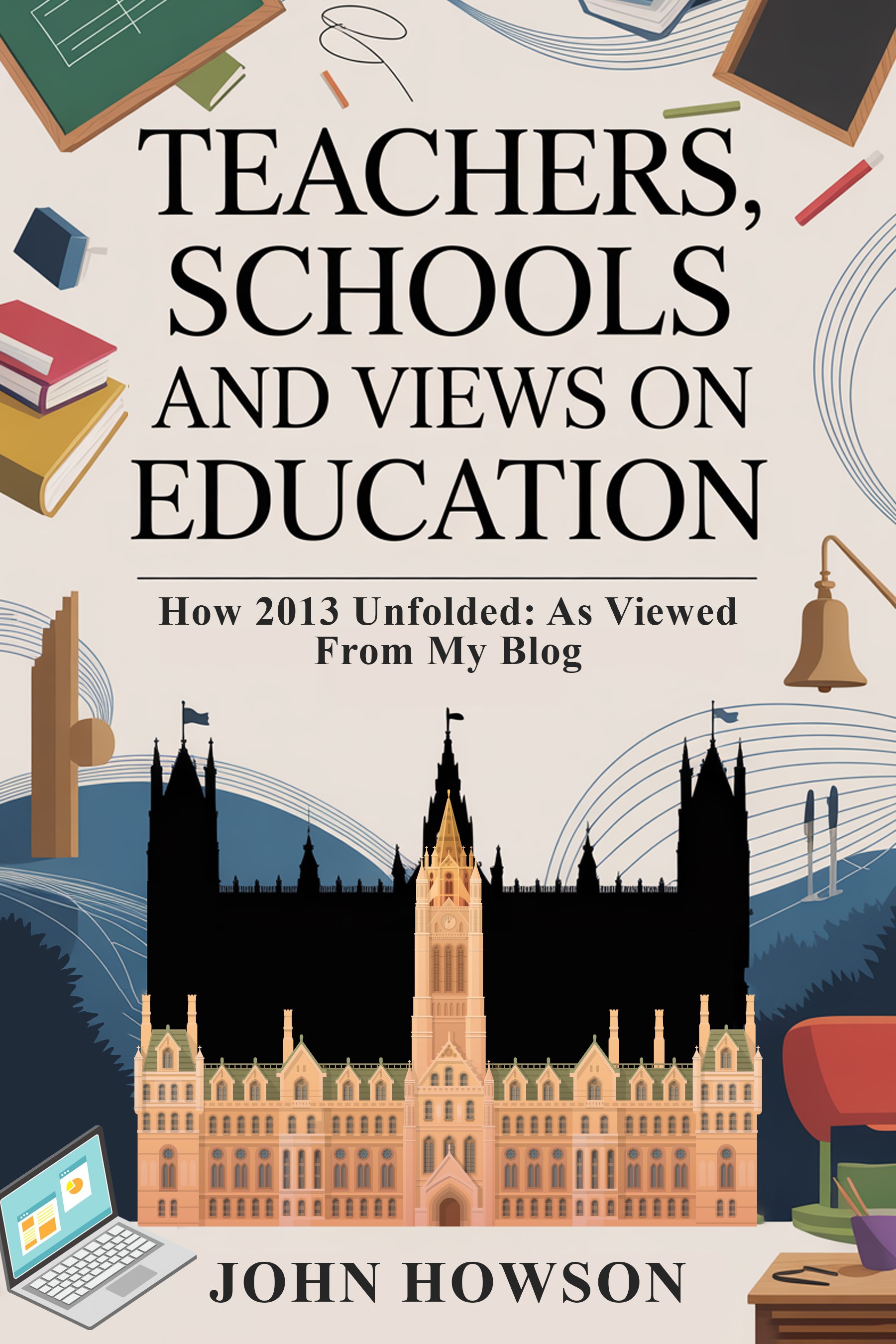
Once this book has covered its costs, I will publish another on the 100 most read posts – with a bit of commentary as to why they might have received so much attention. To date, posts about teachers’ holiday entitlements lead by a long way. It seems like the myth of long holidays is deeply engrained in the public’s psyche.

As someone that failed their English Language examination at age 16, I never thought that I would write a column for the TES between 1997 and 2010, and this blog since 2013. Sub-editors taught me a lot, and on-line software has helped. Interestingly, I have experimented recently with turning the text of a blog post into a webinar conversation. If you ae interested, I will leave you to search the 2026 posts for an example.   

In the past, comments were more frequent that they are these days, although ‘likes’ still seem to crop up from time to time. My thanks to those that ‘like’ every post I write. I am not used to having such a fan base.

My especially thanks to, Janet D, Frank S and Sue B for their many comments. Along with teachingbattleground, they make up the most frequent commentators over the years on my posts. Frank was at school with me, and I still remember his part in TCS plays.

Where now for the blog? Well, I hope to keep it going for some time yet, as there is certainly plenty of material to write about. My special field is the labour market for teachers and, especially, headteachers, where I have more than 40 years of data from my research. Later today, I will post, as my next blog post, about how my findings compare with a report that was published yesterday. AI can do some things, but it still has much to be taught to make it even more useful as a research tool.

So, once again, thank you to my audience, whether you have just read one post, have delved into the archive as part of research for a project, or are one of the small number of regular readers.  

30th April update

A, my thanks to you, the readers for the best April ever for the blog. 2,000 readers over the courses of the month!

Thank you.

Teacher Turnover- Is England doing better than the USA?

An interesting report crossed my desk a the end of last week. Teacher Turnover in the United States: Who Moves, Who Leaves, and Why | Learning Policy Institute This study, by Tiffany Tan, Wesley Wei, Desiree Carver-Thomas, and Emma García was produced the Learning Policy Institute, and first appeared in mid-March.

Key findings were that;

Teacher turnover remains high nationally. Between 2020–21 and 2021–22, 15.1% of U.S. teachers moved schools or left the profession: 8.0% moved schools, and 7.1% left teaching. Turnover rates have been largely stable over the past 2 decades but are now about 27% higher than in the early 1990s—an increase driven primarily because the rates of teachers leaving the profession increased by more than 50%.

Most teacher turnover was voluntary and preretirement. Nearly 3 in 4 teachers (74%) who moved or left did so voluntarily for reasons other than retirement. This percentage is higher than it was 10 years ago, when 67% of teachers left their schools voluntarily and preretirement.

Nearly half of teachers who moved schools stayed within the same district, and almost 40% of those who left teaching remained in the education sector. Among movers, 36.5% of teachers moved to a different district in the same state, while 17.3% moved to a different state. Of those who left teaching, 31.2% retired, whereas 13.1% took jobs in other sectors.

Teacher turnover rates vary across groups of teachers. 

It is interesting to compare this survey with the NfER’s recent Report on the School Workforce in England

School teacher retention has improved slightly in recent years, with the leaving rate falling from 10.6 per cent in 2016/17 to 9.5 per cent in 2021/22 and nine per cent in the most recent data. This has contributed to lower ITT recruitment targets and increased teacher numbers overall. The exit rate of first-year early career teachers who left within one year between 2023/24 and 2024/25 was 10.3 per cent, the lowest rate since the data began. (page 11)

The NfER conclusion seems much more optimistic than that of the US Report from LPI.

In contrast to previous NFER reports on the teacher workforce, the flows of teachers into and out of the labour market look reasonably healthy for the future of teacher supply. Recruitment is improving, even in some subjects which have seen persistent shortages. Teachers were less likely to leave the workforce last year compared to any year since 2010/11, outside of the pandemic. The early career teacher retention rate is the best on record. Teachers’ working hours are steadily coming down on average and the proportion of teachers who report having an acceptable workload has improved somewhat. Some progress has also been made in the competitiveness of teachers’ pay. Most teachers’ have received a pay increase of at least four per cent for each of the last four years, which has been higher than inflation over the period and even closed the gap – albeit only partially – that had opened up between teacher pay growth and average earnings growth since 2010/11. The increase in job insecurity and slowdown of job opportunities in the wider labour market is also likely to be a key factor driving recent trends (page 24) https://www.nfer.ac.uk/media/idcdsseo/the_school_teacher_workforce_in_england_annual_report_2026.pdf

This may be because the pupil population in England is in decline. The consequences are that there are fewer opportunities for teachers to move to different schools, and more teachers stay put. There is also less pressure on training numbers, so teaching looks like a more competitive occupation. While the economy and technology changes, such as the fear of the AI effect on graduate jobs may also be working to make teaching look more attractive as a career path in a more challenging graduate labour market.

However, I wonder whether many of the issues reported in depth in the LPI Report, such as the higher turnover of Black teachers; more turnover of teachers in certain subjects, and in certain types of school, may also be features of the labour market for teachers in Egland.  Certainly, we know that teachers from ethnic minority backgrounds fare less well in teaching than those from the majority ethnic community, as I have discussed in past posts. I suspect many of the other concerns raised by the LPI Report may also have credence in England were the data to be examined in that level of detail.

For issues around ethnicity and teachers in England, see my previous blog posts

Ethnicity issues remain for new teachers | John Howson

Ethnicity issues remain for new teachers | John Howson

Slow progress on ethnic minority headteacher numbers | John Howson

1,500 posts and counting

When I wrote my first post on this blog, on the 25th of January 2013, I little though that I would reach 1,500 posts. However, despite stopping posting for 18 months, between the autumn of 2023 and May this year, while I was otherwise occupied as a cabinet member on Oxfordshire County Council the blog has now reached the milestone of 1,500 posts, including 40 so far this year since I started the blog up again this May.

Since one of the features of the blog has been commenting on numbers, here is a bit of self-indulgence. The blog has had 175,983 views since its inception, from 93,875 visitors, and has attracted 1,459 comments. The average length of a post has been between 550-670 words, although there have been a few longer posts in response to consultations and Select Committee inquiries.

How much holiday do teacher have? is the post with the most views – more than 6,500 and rising. Some posts have had no views, but are still an important record of my thoughts. The United Kingdom has been responsible for the most visitors: not a surprise, as most posts are about education in England. However, the USA comes second, with more than 15,000 views. Apart from some former French speaking countries in West Africa, Greenland and Paraguay, almost all other countries have had someone that has viewed the blog at least once.

Later this year, I will be publishing a book of the 2013 posts from the blog, and at that point they will disappear from public view. If you want to register for the book, check on Amazon after August 2025 or email dataforeducation@gmail.com for publication information. Alternatively, ask your favourite bookshop or library to order a copy.

I am sometimes asked about my favourite post. With 1,500 to choose from, that’s difficult, as many haven’t seen the light of day for a decade or so. However, Am I a blob? From 2013, was fun to write, and the posts about Jacob’s Law finally brought about a change in the legislation over admissions in the current bill going through parliament.

Most posts have been written, as this one is, in one session from start to finish, with editing just to tidy up my thoughts. Some are more passionate than others, and many are about teacher supply issues, where I am also researching a book on the subject covering the past 60 years of ‘feast and famine’. Much of the recent history has been well chronicled in this blog.

Thanks for reading, and for the comments. Who would have thought that someone that failed ‘O’ level English six times would end up writing a blog!  Funny old world.

Don’t forget Jacob

At the end of January, this blog will celebrate its 10th birthday: a decade of writing. As of today, the blog has published 1,364 posts during those 10 years, with a total wordcount, according to WordPress analytics, of around 800,000 words, or around nine or 10 PhDs. Of course, blogs aren’t peer reviewed in the same way as academic articles are pre-publication, but, like journalism, they are subject to the gaze of readers from around the world. What I think are important posts are sometimes barely read, whereas other posts have been read much more frequently. The most read posts each year are listed below:

2022 Teacher Recruitment: How much should it cost to advertise a vacancy?

2021 Half of secondary ITT applicants in just 3 subjects

2020 Poverty is not destiny – OECD PISA Report

2019 How do you teach politics today?

2018 Applications to train as a teacher still far too low for comfort

2017 Coasting schools

2016 1% pay rise for most teachers likely in 2016

2015 Grim news on teacher training

2014 More on made not born: how teachers are created

2013 Has Michael Gove failed to learn the lessons of history?

The most read of these was the September 2020 post entitled ‘Poverty is not destiny’ that was read 1,544 times during that October and was read more than 1,600 times in all during the autumn of 2020.

Older posts can collect more ‘reads’ overall as new readers browse the back catalogue. Just before Christmas 2022, someone browsed the whole of the back catalogue, resulting in the highest monthly figures recorded for any single month since the blog started.

The genesis for the blog was the columns that I wrote for the then TES between the late 1990s and my retirement in 2011. I am lucky to have many of those columns in a presentation book created for my retirement.

This column has looked at numbers to do with education, mostly statistics, but also management information. Some of the latter has been provided by TeachVac, the job matching site I helped create and run some eight years ago.

There are a few other posts of which my, so far unsuccessful, campaign for a Jacob’s Law is the most important. This Law would ensure no child was left without a school place for longer than three weeks and is especially important for the many children taken into care. If we want to stop them becoming NEETs, we need to keep them in education not cast them aside because they might be a ‘bit of challenge’. Who would be a challenge if taken from home without any warning as a young person and moved to a different location away from friends and familiar locations and your school. (Search for Jacob for the various posts about this issue)

Please campaign to ensure a place for every child in a school. These young people are the education equivalent of the patients in A&E waiting on trolleys, but their wait can be six months, and just as life changing! Lt’s make 2023 the year the DfE tackled this issue.

Thank you America

This month there have already been some 500 recorded visits to this blog from the USA. An especial thanks to those Americans that took the time to visit on Thanksgiving Day. There weren’t as many visits as on Christmas Day 2019, when someone downloaded all 990 posts over the course of the day, but there were some.

I am very grateful to those that read the blog and send me comments. Pre-orders for my new book ‘Twin Tracks‘ written jointly with my brother – hence the title – about our pre-covid rail tour around parts of Europe are already mounting up. In England, Waterstones are offering the book at a pre-publication discount (put John & Peter Howson in their site to place an order).Read more in the blog titled Twin Tracks.

In January, and the 1,000th post, I wrote about winding down this blog. Seemingly, that hasn’t been the case, and I am wondering whether to celebrate its 8th birthday by selecting the best 250 posts to put into a book. Would you recommend such a book to your library to buy? Do please let me know.

So, thank you to all my current, past and future readers.

Teacher Shortages in the USA

The issue of teacher supply, and more specifically increases in the number of teachers quitting their jobs, featured in an article in the Wall Street Journal last week https://www.wsj.com/articles/teachers-quit-jobs-at-highest-rate-on-record-11545993052 It seems that the issue of teacher supply isn’t just a problem this side of the Atlantic, but one that has now hit the headlines in the USA. As a result, I am slightly surprised not to have seen a tweet from Donald Trump on the subject, perhaps stating that anyone can be a teacher.

A tight labor market, years of uncompetitive salary increases and a challenging job are all familiar reasons for the departure of experienced teachers cited in the article and known to those of us that study the labour market for teachers in England.

Interestingly, the Wall Street Journal didn’t mention a possible move overseas, in order to teach in an international school, as another reason teachers might be quitting. The article also didn’t mention whether there was also an issue of recruiting potential teachers into training courses in parts of the USA. However, it did raise the spectre of an increase in the number of unqualified teachers. I don’t think that the article mentioned Teach for America, one of the original alternative certification programs created during an earlier teacher supply crisis around the turn of the century. It also didn’t reflect upon whether technology might help overcome a shortage of teachers.

Education in the USA is generally a local activity managed by School Boards and largely overseen by the individual States. Some States have traditionally had good teacher planning mechanisms, such as we enjoy in England, but others have been less concerned with planning and more interested in a market-based approach.

One question, if the shortage continues and even worsens, is whether some States might go shopping for teachers overseas in order to help fill their vacancies in the same way that heads in England turn to Canada, Australia and New Zealand for potential recruits when the pipeline dries up at home.

Some US States have turned to the Caribbean countries in the past, but might they look further afield if the supply problem deteriorates further. Could we see competition between US and UK schools for the same teachers and could there even be attempts to entice UK teachers to take up work in the USA? I don’t think that is especially likely, but it is worth recalling that Michael Gove, when Education Secretary, did grant QTS to all teachers in the USA that are qualified, to allow them to teach in England without any need for further qualifications.

I will look at the agenda for this spring’s AERA Conference to see whether teacher supply is once again back on the radar of academics, as well as of journalists. I might just also delve into the archives and dust off some of the articles from conferences 20 years ago to see whether this is a case of history repeating itself or whether there is a new twist to the tale this time around.


Hymns and Schools

What better way for a writer of an education blog to spend Christmas Day than to recall some of the Victorian hymns that feature schools and education, either in their title or the actual words. However, research hasn’t yet yield up a ‘carol’ with a direct school reference.

In 1829 there appeared in the USA, ‘Hark, the infant school bell’s ringing’ by a Miss M. J. and composed for Infant school Number 1. This appeared in the aptly named ‘The infant School and Nursery Hymn Book, published in New York as long ago as 1831.

Of course, it is necessary to winnow out the much larger collection of hymns about Sunday, or as the Americans seem to call them Sabbath Schools, when seeking for those hymns about schools as more general education establishments. However, it is worth recalling the debt that the development of education has paid to those that started the ‘Sunday School’ movement more than two centuries ago.

Hymns about schools in general, and especially schools for younger children capable of instruction, appeared throughout the Nineteenth and early Twentieth centuries, especially in the USA. Some of their first lines included:

Lord and Saviour, true and kind

We build our school on thee, O Lord

To infant school. To infant school

Dear God, a school day

Gracious God, our heavenly father, meet and bless our school

How we love our infant school

The bell rings for school

Our youthful hearts for learning burn – with the third verse starting ‘Our teachers are so very kind, We love to go to school.’ This hymn appeared in hymn books up to the 1930s.

Henry James Buckoll an assistant master at Rugby School was responsible for two of the more enduring hymns relating to the school year: ‘Lord dismiss us with thy blessing’ and ‘Lord, behold us with Thy blessing, Once again assembled here’. I am not sure what new pupils made of the reference to ‘once again’, but perhaps it was the schools as an entity and not the pupil as a person Buckoll was writing about.

Perhaps surprisingly, given the large number of Church of England and Roman Catholic primary schools in England, not to mention the remaining few Methodist primary schools around the country, there appears to be little specifically written hymns for these pupils to sing in modern hymn books.

Like other popular songs, hymns appear to go out of fashion, although at Christmas the staples of O Come all ye Faithful; Hark the Herald Angels Sing; Silent Night; O little town of Bethlehem; Away in a manger and while shepherds watched their flocks by night, all seem to come around every year.

So, festive best wishes to both regular readers of this blog and those that have alighted on this festive post. May 2018 be a wonderful year for you wherever you are reading this Christmas epistle.

More or less, but not enough

Last week in the House of Commons, the Secretary of State for Education confirmed that ‘some 32,543 trainee teachers started undergraduate or postgraduate initial teacher training in 2014-15—236 fewer than last year’. She went on to add that on the fact that ‘one reason more teachers are attracted to the profession is the recovering economy’. I am not sure whether that was a slip of the tongue or a deliberate juxtaposition of two seemingly different facts?

Either way, the numbers are nowhere near as high as the DfE has predicted will be needed to meet the demands of schools in 2015 for teachers unless there are more returners than expected or, as now seems likely, schools start recruiting overseas. BBC Radio Kent is covering the issue on Tuesday morning in their Breakfast Show, as it seems likely that some schools in the county are already considering looking overseas for teachers.

Any qualified teachers in the USA, Canada, New Zealand and Australia thinking about working in England as a teacher are reminded that they have automatic qualified teacher status and this means they can be paid the same rate as teachers qualified in the UK or EU. In the event that they need a visa to work in England, some agencies are adept at making a case to the Home Office to grant a visa. Teachers and schools should always check the track record of agencies in this respect as well as whether they are members of the Recruitment Employer’s Confederation, a trade body for the industry.

Vacancies in November may well have been higher than in the past few years. We have recorded more than 3,000 main scale posts notified by secondary schools across England.

Schools can register these vacancies for free at www.teachvac.co.uk – the site has a demo video of the simple registration and recording process: trainees and teachers can also use the site to tell us where they want to teach. Overseas teachers can register and use the site to monitor vacancies in areas where they are interested in teaching and there is a demo video for teachers about the site as well. At present, the site is restricted to main scale posts in the secondary sector.

Trainees using the site also have access to a monthly newsletter with information about making the best of applications, interviews, and, in coming months, the current state of the job market.

Based upon current sign up numbers we are starting to create a picture of possible job hotspots in certain subjects and as we expect to be able to offer advice on how the recruitment season will unfold between January and some point in the summer term. With schools already having a good idea of their budgets for 2015/16, recruitment is likely to start early to provide schools with the best opportunity to access the largest number of potential teachers, especially in those subjects where recruitment is likely to be the most challenging: physics, design & technology, English and business studies.

Scaremongering!

So now I know I am officially a scaremonger. A DfE spokesperson, helpfully anonymous, is quoted by the Daily Mail today as saying of my delving into the current teacher training position that there was no teacher shortage, adding: ‘This is scaremongering and based on incomplete evidence.’

Well the first thing to note is that I haven’t said that there is a teacher shortage, just that training places are not being filled: not the same thing. Indeed, I have said a teacher shortage is less likely than in the past in the near future because Mr Gove has mandated that qualified teachers from Canada, Australia, New Zealand and the whole of the USA can teach here as qualified teachers with no need to retrain. With an oversupply of teachers in parts of both Canada and Australia that should prevent any short-term problem developing even though another part of the government isn’t very keen on importing workers from abroad, presumably including from within the Commonwealth and a one time colony.

More serious is the charge of using ‘incomplete evidence’ in reaching my conclusions. If the DfE has figures to show that more places will be filled this September on teacher training courses than I am predicting, then please will they share them with the wider community, if not, will they please justify what they mean.

It could be that they take issue with my colleague Chris Waterman’s assessment of the number of those likely to be taught Mathematics by unqualified teachers. However, it is worth noting that earlier this year the DfE produced its own evidence to show that 17.9% of the Mathematics hours taught to years 7-13 were led by those with ‘no relevant post A Level qualification’. That was some 85,000 hours of instruction. Assuming each class of pupils has six hours of contact per week that makes more than 14,000 classes already being taught by unqualified staff, and with no programme in place to improve their qualifications if they are intending to teach the subject for a period of time. If each class has only 20 pupils, the total number of pupils already being taught by teachers with no measurable post A Level qualification in Mathematics can easily be worked out. It is also worth pointing out that the DfE showed that in November 2012 less than half of those teaching Mathematics had a degree that could be classified as a Mathematics degree, with 23% having a PGCE as their highest Mathematics qualification and a degree in another subject, hopefully with lots of applied mathematics as a apart of the degree.

As Chris Waterman has rightly pointed out the raising of the participation age to 17 this September and 18 a year later should increase the demand for Mathematics teachers as the Wolf Report endorsed the now widely held view that more youngsters should continue to study Mathematics until the age of18.

The government has taken a bold gamble with teacher education: moving training to schools; introducing pre-entry tests in literacy and numeracy; raising the cost of training in many subjects to £9,000 for fees plus living costs. It is important that there is a credible debate about how these changes are working.

After all, in 2010, Mr Gove promised 200 teachers of Mandarin would be trained each year, and although some providers such as the London Institute offer it as an option I doubt that target was ever reached. It is time for a radical overhaul of teacher preparation to really meet the needs of a 21st century education system.

STEM subjects lead retreat from teaching

In March 2010 I talked to the UCET (University Council for the Education of Teachers) Research and Development Committee about reading the runes on what might happen to teacher supply. My final slide  predicted the next teacher supply crisis would be in London in September 2014.

Now I may have been premature in the arts and humanities subjects because of the time the economy has taken to recover from the battering it took after the banking crisis of 2008, but the latest evidence seems to suggest that in the STEM subjects I was right to be concerned. An analysis of the two key routes into training that are covered by DfE targets – School Direct and Higher Education/SCITTs suggests that unless there is a late surge in acceptances recruitment to STEM subjects will be down on recent years.

The following table is based upon data collected over the period 2-5th August, i.e. last weekend.

Current acceptances 2013 AUG
COMPARED with the 2012 TARGET SUBJECT

-113

ENGLISH

-844

MATHEMATICS

-146

BIOLOGY/ GEN SCI

-235

CHEMISTRY

-411

PHYSICS INC PHYSICS WITH MATHS

-452

ICT

-465

D&T

-183

MFL

-31

GEOGRAPHY

170

HISTORY

8

ART & DESIGN

-51

MUSIC

79

PE

-127

RE

-29

BUSINESS STUDIES

-65

CITIZENSHIP

130

OTHER

The advent of pre-entry skills test in numeracy and literacy makes it less likely than in previous years that there will be a significant number of last minute entrants. Indeed, it might help matters if the government suspended that requirement for this year while it sorts out the common admission framework for next year. At present, we don’t know how many candidates may be holding more than one place, and we also don’t know the level of ‘no shows’ when courses actually commence.  Of course, these figures will be boosted by those national providers such as the OU that don’t reveal their acceptances as part of the national monitoring arrangements, but that won’t eliminate the shortfall.

So, if the data is anywhere near accurate, schools may have to start looking for alternative sources of mathematics, science and computer studies teachers in 2014, especially in London and the South East where turnover of teachers doubled between 2010 and 2013. As teachers from Australia, Canada, New Zealand and the USA can now teach in England with no further training needed, and as academies and free schools don’t even need to employ qualified teachers – not that any school ever did in a crisis situation – any gaps will be filled somehow. But teacher shortages are likely to make a mockery of the government’s avowed policy of closing the achievement gap between the rich and the poorest in society.

The government will also need to look carefully at the level of bursary support it provides trainees, although it is somewhat prescribed by starting salaries as there is no benefit in trainees having to take a pay cut when they finish their training on top of starting to pay back their tuition fee loans that already reduces their real incomes in many cases.

With a general election in 2015, the government cannot afford the seeds of another teacher supply crisis even if it is based upon an improving overall economy. A world-class education system cannot be built on a teacher supply crisis, and it would be even more ironic if the success of UK schooling for overseas pupils sucked the brightest and best teachers from the domestic State system at the very point where there weren’t enough to go around.