Blog to podcast: views welcome

I have used AI to generate a podcast from the text of the previous post about music ITT numbers being unlikely to meet their target. The link ishttps://drive.google.com/file/d/1oBFKJw7ucryRK1hNTvHy2gOIdDcJWaOQ/view?usp=drive_web

Feedback welcome through the comments section. Voices are US because of the platform used, and a free version, so that may jar with some listeners, but not with others.

The podcast is nearly 15 minutes long from a blog of less than 600 words. Does it read too much into the blog? Does it make explicit issues that are implicit in the blog. Genuinely interested in whether it adds to what I wrote or takes it over and makes it something different, and not authored by me.

Thanks for listening

Happy 14th birthday, and my thanks to WordPress

Dear Reader,

Today, Sunday 25th January 2026, marks the 14th birthday of this blog, so thanks for taking the time to read what I have written since January 2013.

Copilot tells me that 96% of blogs started in January 2013 have fallen by the wayside by 2026: but can you believe everything AI tells you?

 Sadly, WordPress doesn’t publish such statistics, but it would be interesting to know how many have persevered with what is now a somewhat outdated form of communication. Unlike others, I haven’t switched to creating a podcast, although I did experiment with one way back in 2007; but that’s another story, as is the online chatroom, pioneered with the TES back in 2003.

By the time of its 14th birthday, this blog has had over 180,00 views by more than 97,000 visitors according to WordPress of the 1,59 posts that I have written since the blog started in 2013.

The most popular has been the one on ‘how much holiday do teachers really have’, with more than 6,100 views since it first appeared on the 20th May 2022.

Of course, at the opposite end of the scale, there are many posts where I have been the only person to have read what I wrote, according to WordPress. However, on Christmas Day, 2022, someone downloaded all the posts up to that date: hopefully, they also read them.

Between October 2023 and May 2025, while I was the Cabinet Member for Children’s Services on Oxfordshire County Council, I took a holiday from posting on the blog,

Since, I started writing posts again in May of 2025, after ceasing to be an elected politician, readership has been slowly increasing, to now reach double what it was at its low point. This is mostly thanks to readers from around the world once again deciding to view what I write.

So, what do I write about? Mostly education; frequently teacher supply matters – a research interest of mine for more than 40 years, if you start when I began counting vacancies for headteachers. My interest in ITT data goes back to 1987, when as a new senior leader in a School of Education I was faced with dealing with the consequences of an 100% over-recruitment on a primary PGCE.

I am most proud of the wok on Jacob’s Law, to ensure all children have a school place even if they move home mid-year, as often happens when a child is taken into care. No school with spare places should ever refuse such a child a place. What to do if they are bright enough for a grammar school place when moving from a comprehensive system is a question the government still needs to address.

The blog will continue into its next year, but as I approach my 80th birthday in 2027, perhaps the blog won’t make its 20th birthday: who knows. And, finally another reason for not producing a podcast; you cannot see the data tables, include din many of the posts.

Thanks for reading, and a happy birthday.

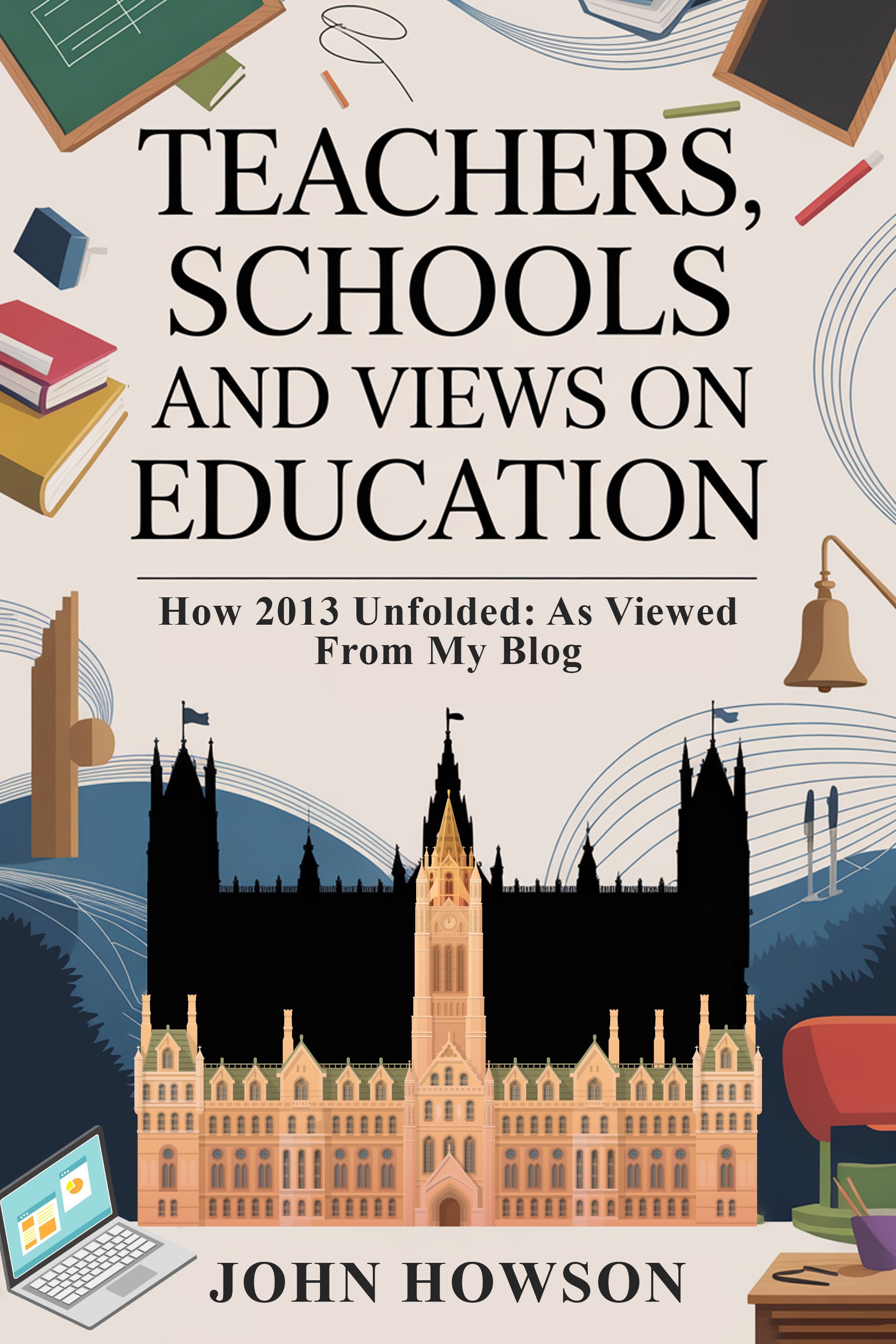
Excellent Christmas Present

Excellent Christmas present for anyone interested in education or politics. £9 e-book on amazon or £12 plus £2.50 p&p for signed copy direct from dataforeducation@johnohowson

Sample content at: https://www.amazon.co.uk/dp/B0FM84M3SX/ref=sr_1_2?dib=eyJ2IjoiMSJ9.Ja2jQ8JWKzm1XbVFd1O0GL9pWmt0RP-y9kKowNMdNALI4aiNoApcLhXrph2KReV129XhXij1o0nFR_3lhNj5hFUezqp0NTFjyZgcOZmDVq1dNXvgGB2-8fUUTGwkfkCv-RT9NauN-j0zw3digD6_ctOlJBV9RWNq-qL5WJ9XsWjNrLJBQMYxn8XWYP11bv1Ci0guE7srVSVfSRE2xjpShoU85Q2BXBQ_9mzFqwNRIMo.TArvGiYetMB8AVett_7nOdAchUvw90IzCA63PTtzpvg&dib_tag=se&qid=1755079949&refinements=p_27%3AJOHN+HOWSON&s=digital-text&sr=1-2&text=JOHN+HOWSON&asin=B0FM84M3SX&revisionId=e834512b&format=3&depth=1

1,500 posts and counting

When I wrote my first post on this blog, on the 25th of January 2013, I little though that I would reach 1,500 posts. However, despite stopping posting for 18 months, between the autumn of 2023 and May this year, while I was otherwise occupied as a cabinet member on Oxfordshire County Council the blog has now reached the milestone of 1,500 posts, including 40 so far this year since I started the blog up again this May.

Since one of the features of the blog has been commenting on numbers, here is a bit of self-indulgence. The blog has had 175,983 views since its inception, from 93,875 visitors, and has attracted 1,459 comments. The average length of a post has been between 550-670 words, although there have been a few longer posts in response to consultations and Select Committee inquiries.

How much holiday do teacher have? is the post with the most views – more than 6,500 and rising. Some posts have had no views, but are still an important record of my thoughts. The United Kingdom has been responsible for the most visitors: not a surprise, as most posts are about education in England. However, the USA comes second, with more than 15,000 views. Apart from some former French speaking countries in West Africa, Greenland and Paraguay, almost all other countries have had someone that has viewed the blog at least once.

Later this year, I will be publishing a book of the 2013 posts from the blog, and at that point they will disappear from public view. If you want to register for the book, check on Amazon after August 2025 or email dataforeducation@gmail.com for publication information. Alternatively, ask your favourite bookshop or library to order a copy.

I am sometimes asked about my favourite post. With 1,500 to choose from, that’s difficult, as many haven’t seen the light of day for a decade or so. However, Am I a blob? From 2013, was fun to write, and the posts about Jacob’s Law finally brought about a change in the legislation over admissions in the current bill going through parliament.

Most posts have been written, as this one is, in one session from start to finish, with editing just to tidy up my thoughts. Some are more passionate than others, and many are about teacher supply issues, where I am also researching a book on the subject covering the past 60 years of ‘feast and famine’. Much of the recent history has been well chronicled in this blog.

Thanks for reading, and for the comments. Who would have thought that someone that failed ‘O’ level English six times would end up writing a blog!  Funny old world.

A decade of blogs

Today, 25th January 2023 is the official 10th birthday of this blog. Earlier this month, I wrote a blog reviewing the past ten years. That was entitled ‘Don’t forget Jacob’ Don’t forget Jacob | John Howson (wordpress.com) as a salute to the, as yet, unsuccessful campaign to ensure all children taken into care or arriving new to an area can be placed on the roll of a school within three weeks, regardless of whether the schools is an academy, free school or a maintained school. Every child has a right to an education with their peers and not just at home supported by worksheets and the occasional visit from a tutor.

Supporting that campaign shows how this blog has evolved over the past decade. Started just to deal with stories around the numbers in education (mostly the school sector) it has taken on a wider role as a consequence of two events in my life. In May 2013, I was elected to Oxfordshire County Council for a North Oxford Division, and for eight years was the Lib Dem spokesperson on education on the county.

In 2015, I helped establish TeachVac, the job board for teachers that has flourished, if measured by the number of users and the data it has gathered, but for a variety of reasons has yet to be a commercial success: perhaps I have had too many other distractions, including this blog, to become a successful business owner.

After, ten years and 1,372 posts (including this one) that have been seen by more than 80,000 visitors from all around the world, I have to decide: what next? Two years ago, I nearly decided to close down the blog as readership had fallen dramatically from around 22,000 visitors a year to just 11,000, but I kept going. Once again, I face the same dilemma. For the past quarter of a century, I have written pieces every week, first for the TES, as it then was, and then for this blog.

Is it time to call a day? I think the unfinished business of inadequate recruitment into teaching need regular highlighting, but NfER and Jack Worth can do that as easily and with better graphics that I can do. Most of the other posts are opportunistic, and some garner very few views; In some cases none at all, as with the post about this blog highlighted above.

So, you may notice that rather than the average of some ten posts a month of the past, the number drops off from now onwards, and I concentrate on other matters.  

Thank you to those that do read the blog. It has been a labour of love to write, and I have never regretted composing these posts, although there are a few that once written never saw the light of day. Finally, last December, someone downloaded every single post that I had written. I would love to know why and what they have done with them? Happy Birthday, and thanks, especially to Frank.

150,000 views

Yesterday, this blog recorded the 150,000th view over the course of its lifetime. Not a huge number, especially when compared with those that bloggers that measure their followers in terms of such numbers and their views in the millions, but a pleasing response to the effort required to write the nearly 1,300 posts over the lifetime of the blog to date.

The blog has widened its scope since its inception in January 2013, when it first appeared. At that time, I was experiencing withdrawal symptoms from no longer facing the discipline required in writing a weekly column for the TES, as I had done for more than ten years. Over time, this blog has become a means of recording my thoughts on what has mattered to me about the changing face of education than just a replaced for that long-departed column.

As regular readers know, I am not a neutral commentator, but an active politician serving the Liberal Democrats as a councillor in Oxfordshire. My political beliefs undoubtedly colour my views on the many topics this blog has covered that have values associated with them. After all, education is not a value free activity, as the challenges of the past two years have so clearly demonstrated to us all.

There is, perhaps, less about the curriculum and assessment in this blog than some might wish and for a few perhaps too much about teachers and the labour market for teachers. However, counting heads and teachers has been something of a lifetime’s work for me. I first started counting headteachers in the early 1980s and apart for the period between 2011 and 2013 have never stopped doing so since then.

My aim has been posts of around 500 words, although a few substantially longer ones, such as my submission to the Carter Review, and transcripts of various talks that I have given, have appeared from time to time. There have also been some shorter posts, although WordPress informs me that the average length has been nearer to 600 than 500 words. Perhaps some of that is down to the manner in which tables and statistics are counted.

So, if you have read this far into this post, my challenge to you, either as a regular reader or someone that has dipped in and out from time to time, is to ask you to put in the comment section the post would most want to highlight.  

And above all thank you for both taking the time to read my posts and to communicate via comments and emails your views to me. I have much appreciated the dialogue.  

There have been times when I thought about stopping this blog, but I would now like to see out a decade of writing and then reassess where the blog goes from there. Podcasts and even videos are now more fashionable that just the written word, but both are technologies I have yet to conquer. Should I bother? There is time to ponder that question.

Happy Birthday

Today is the ninth birthday of this blog! A birthday is a good time to look back at what was written in the past on the blog. One of the interesting posts came early in the life of the blog, in July 2013, when I called for action by the government and suggested that “ministers must take urgent action if we are not to see a re-run of the crisis in teacher recruitment that occurred in the early days of the Blair government.” The full quote is reproduced below and can be seen on the blog by searching the July 2013 posts.

“Coming, as this outcome does, after several years when recruitment to teacher training has largely not been an issue, the present situation is a wake-up call for all concerned, and ministers must take urgent action if we are not to see a re-run of the crisis in teacher recruitment that occurred in the early days of the Blair government.  There are two months left before the training courses start, so all is not yet lost. However, if my predictions prove accurate, some schools are going to struggle to recruit teachers next summer: good news for recruitment agencies, but probably not for some pupils. And, as I have said before, this is no way to create a world-class education system.”

Extract from

Has Michael Gove failed to learn the lessons of history?

Posted on July 2, 2013

There was a fairly swift response from Sanctuary Buildings that sparked something of a spat and the first Statistical Bulletin on the Teacher Supply Model for a while. Regular readers can make their own minds up about the extent to which I was “scaremongering” or a prophet ‘crying in the wilderness’. I wrote in August 2013 the following:

“So now I know I am officially a scaremonger. A DfE spokesperson, helpfully anonymous, is quoted by the Daily Mail today as saying of my delving into the current teacher training position that there was no teacher shortage, adding: ‘This is scaremongering and based on incomplete evidence.’

Well, the first thing to note is that I haven’t said that there is a teacher shortage, just that training places are not being filled: not the same thing. Indeed, I have said a teacher shortage is less likely than in the past in the near future because Mr Gove has mandated that qualified teachers from Canada, Australia, New Zealand and the whole of the USA can teach here as qualified teachers with no need to retrain. With an oversupply of teachers in parts of both Canada and Australia that should prevent any short-term problem developing even though another part of the government isn’t very keen on importing workers from abroad, presumably including from within the Commonwealth and a onetime colony.”

Extract from

Scaremongering!

Posted on August 14, 2013

I suspect anyone interested in the supply of teachers of physics, design and technology and business studies may have a different view about these quotes from those interested in the supply of PE and history teachers.

The DfE now controls the whole teacher supply pipeline from applications to train as a teacher to offering a job board as somewhere for schools in the state sector to place vacancies. To talk or write of a local education service these days would be as much of a misnomer as the write of a local health service rather than of the NHS.

Understanding and controlling teacher supply is important in the national interest and it is worth speculating what the landscape of teacher supply might look like in another nine years if the DfE became seriously involved in the ‘levelling up’ agenda?

Directing new teachers where to work and directing the management of promotions by specifying how MATs ought to deploy their staff might just be two of the ‘innovations’ to look forward to in the next decade if market forces are abandoned in favour of a more interventionist approach.

I am not sure that this blog will be there to chronicle those changes, but I hope to make it to its tenth birthday next year, if that isn’t tempting fate too much.

A look back at history

Eight years ago this month I wrote a post on this blog pointing out my concerns that not all places on ITT courses were likely to be filled that year. My views made it into some national newspapers and resulted in me writing the blog post that I reproduce below. We still have issues with teacher supply in key subjects, but we do possibly have a review of how we train teachers. Whether the outcome will be more trainees filling gaps in schools where they are needed is still an open question.

Scaremongering!

Posted on 1

So now I know I am officially a scaremonger. A DfE spokesperson, helpfully anonymous, is quoted by the Daily Mail today as saying of my delving into the current teacher training position that there was no teacher shortage, adding: ‘This is scaremongering and based on incomplete evidence.’

Well the first thing to note is that I haven’t said that there is a teacher shortage, just that training places are not being filled: not the same thing. Indeed, I have said a teacher shortage is less likely than in the past in the near future because Mr Gove has mandated that qualified teachers from Canada, Australia, New Zealand and the whole of the USA can teach here as qualified teachers with no need to retrain. With an oversupply of teachers in parts of both Canada and Australia that should prevent any short-term problem developing even though another part of the government isn’t very keen on importing workers from abroad, presumably including from within the Commonwealth and a one time colony.

More serious is the charge of using ‘incomplete evidence’ in reaching my conclusions. If the DfE has figures to show that more places will be filled this September on teacher training courses than I am predicting, then please will they share them with the wider community, if not, will they please justify what they mean.

It could be that they take issue with my colleague Chris Waterman’s assessment of the number of those likely to be taught Mathematics by unqualified teachers. However, it is worth noting that earlier this year the DfE produced its own evidence to show that 17.9% of the Mathematics hours taught to years 7-13 were led by those with ‘no relevant post A Level qualification’. That was some 85,000 hours of instruction. Assuming each class of pupils has six hours of contact per week that makes more than 14,000 classes already being taught by unqualified staff, and with no programme in place to improve their qualifications if they are intending to teach the subject for a period of time. If each class has only 20 pupils, the total number of pupils already being taught by teachers with no measurable post A Level qualification in Mathematics can easily be worked out. It is also worth pointing out that the DfE showed that in November 2012 less than half of those teaching Mathematics had a degree that could be classified as a Mathematics degree, with 23% having a PGCE as their highest Mathematics qualification and a degree in another subject, hopefully with lots of applied mathematics as a apart of the degree.

As Chris Waterman has rightly pointed out the raising of the participation age to 17 this September and 18 a year later should increase the demand for Mathematics teachers as the Wolf Report endorsed the now widely held view that more youngsters should continue to study Mathematics until the age of18.

The government has taken a bold gamble with teacher education: moving training to schools; introducing pre-entry tests in literacy and numeracy; raising the cost of training in many subjects to £9,000 for fees plus living costs. It is important that there is a credible debate about how these changes are working.

After all, in 2010, Mr Gove promised 200 teachers of Mandarin would be trained each year, and although some providers such as the London Institute offer it as an option I doubt that target was ever reached. It is time for a radical overhaul of teacher preparation to really meet the needs of a 21st century education system.

Eight years on and who really cares about the qualifications and subject knoweldge of those that teach all our children across England?

Thank you America

This month there have already been some 500 recorded visits to this blog from the USA. An especial thanks to those Americans that took the time to visit on Thanksgiving Day. There weren’t as many visits as on Christmas Day 2019, when someone downloaded all 990 posts over the course of the day, but there were some.

I am very grateful to those that read the blog and send me comments. Pre-orders for my new book ‘Twin Tracks‘ written jointly with my brother – hence the title – about our pre-covid rail tour around parts of Europe are already mounting up. In England, Waterstones are offering the book at a pre-publication discount (put John & Peter Howson in their site to place an order).Read more in the blog titled Twin Tracks.

In January, and the 1,000th post, I wrote about winding down this blog. Seemingly, that hasn’t been the case, and I am wondering whether to celebrate its 8th birthday by selecting the best 250 posts to put into a book. Would you recommend such a book to your library to buy? Do please let me know.

So, thank you to all my current, past and future readers.

Tidying Up

One of the side effects of isolation is the time to do those jobs you have been putting off doing for ages. In my case, this includes tidying up part of my study. However, as I a great believer in ‘creative chaos’ rather than the clean desk method of working, I find it all too easy to become distracted.

The latest distraction has been around two unique books in my collection. Both were given to me as leaving presents. In both cases I had made it clear to colleagues that the normal envelope passed around the staff wasn’t what I wanted. If people wanted to thank me for my time with the organisation, then they need to use their intellectual capital not their cash.

When I left Brookes University in 1996 to join the then Teacher Training Agency as its ‘Chief Professional Adviser on Teacher Supply’ to quote for the press release issued at the time, I asked staff for something that either inspired them in their own education or had been important to them in their career either as a teacher or working in an education establishment. They were kind enough to put the resulting collection to a book, and then to allow me to add some thoughts of my own. I have always wondered whether this might form the basis of an interesting anthology.

The second book was presented to me when I retired from Times Supplements in 2011, just under three years after they had bought my company. My then deputy, crafted a book containing many of the columns that I had written for the TES over the 11 year period when, in one form or another, I churned out a weekly piece, usually about numbers somewhere in the school system. In those days the government produced many more statistics than it seems to do these days.

In the past few years, I have returned to that compendium from time to time, either to check a fact or to reflect how some things have changed and others have stayed the same.

As many regular readers know, I wondered about stopping this blog in January with the 1,000th post. This is the 20th post since then, so that was a New Year resolution that didn’t last. But, looking at the other books, set me thinking whether I should produce two more? Firstly, a collection of the first 1,000 posts on this blog: the good; the bad and the plain indifferent, and secondly a shorter collection of the ‘best’ posts selected by readers?

Do please leave a comment and a suggestion either if you think it a good idea or if you think it a mere vanity project that should be discarded without further ado.

Either way, it is always good to hear from readers and I am still wondering who it was that downloaded every posts on Christmas Day 2019, creating a record score for views on any one day during the history of this blog.