
On Thursday, the DfE published its annual note about the working of the Teacher Supply Model Teacher demand and postgraduate trainee need: 2026 to 2027 – GOV.UK
The Model can be easily described in the DfE’s own diagram
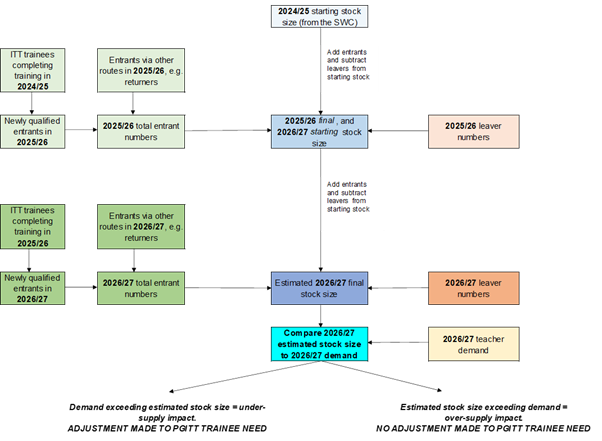
It is interesting to note that the Teacher Supply Model
assumes that as pupil numbers grow, teacher demand will grow too, and vice versa. Additionally, the model assumes that PTRs will grow in line with the historical relationship between pupil numbers and PTRs. Similarly, the model assumes that PTRs will fall if pupil numbers fall. In other words, as pupil numbers grow, the TWM assumes that schools will increase the size of the teacher workforce and allow class sizes to grow a little.
As a result, the Model finds it challenging to manage changes, such as in the curriculum. One of the best examples was the introduction of citizenship during the Blair/Brown Labour government. Schools didn’t sack teachers to make space for teachers trained in the subject, and with no historical data to underpin the need, estimates had to be made.
The assumptions about pupil teacher ratios are, of course, unable to factor in economic headwinds that might change assumptions about future funding of schools. There was a god example early in this century when, in a budget, the Chancellor announced extra cash to be sent directly to schools. Not surprisingly, the schools went after extra teachers and equilibrium in the labour market was only restored by a hike in teachers’ pay that dampened down demand that had not been anticipated in the Modelling.
I have discussed these points with the overseas governments that I have advised on teacher supply modelling over the years. I also favour including a check on what is currently happening in the labour market by surveys of vacancies. Advances in technology, such as pioneered by TeachVac, way back in 2013, allow current trends to be matched with the data input into the Teacher Supply Model that may be two to three years between data collection and the output of trainees based upon the data joining the labour market.
One increasingly interesting issue that the Teacher Supply Model may need to consider is the growing international labour market for teachers. The Model currently imperfectly accounts for loss from the trainee and existing teacher pools to the private sector in England. In the future, it might need to consider how many trainees opt to work abroad. This will be especially important if more overseas students are offered places on teacher preparation courses. Will they be offered visas to teacher in England, or will they leave the country after completion of their courses? I will try to consider this issue in a later post.
Finally, I am delighted that the statisticians have abandoned what they have called ‘the removal of the need for an adjustment relating to forecasted under-supply’. Adding back in the number of unfilled places from a previous ITT round to the next year’s total was never a good idea, as I have made clear in a number of my posts on this blog. The decline in Physics ITT places from a high of 2,250 in 2024/25 to just 810 for 2026/27 is a good case in point.
However, has this re-assessment of need gone too far? Based on Timo Hanney’s work on vacancies and my own current research into vacancies for teachers of music, I think the DfE has been realistic in its approach. After all, if they have under-estimated demand, the government can always recruit more teachers from overseas by enticing those trained here to return to England.

